How to Find & Verify Legitimate IPTV Promo Codes UK 2026
31 August 2026 · 8 min read
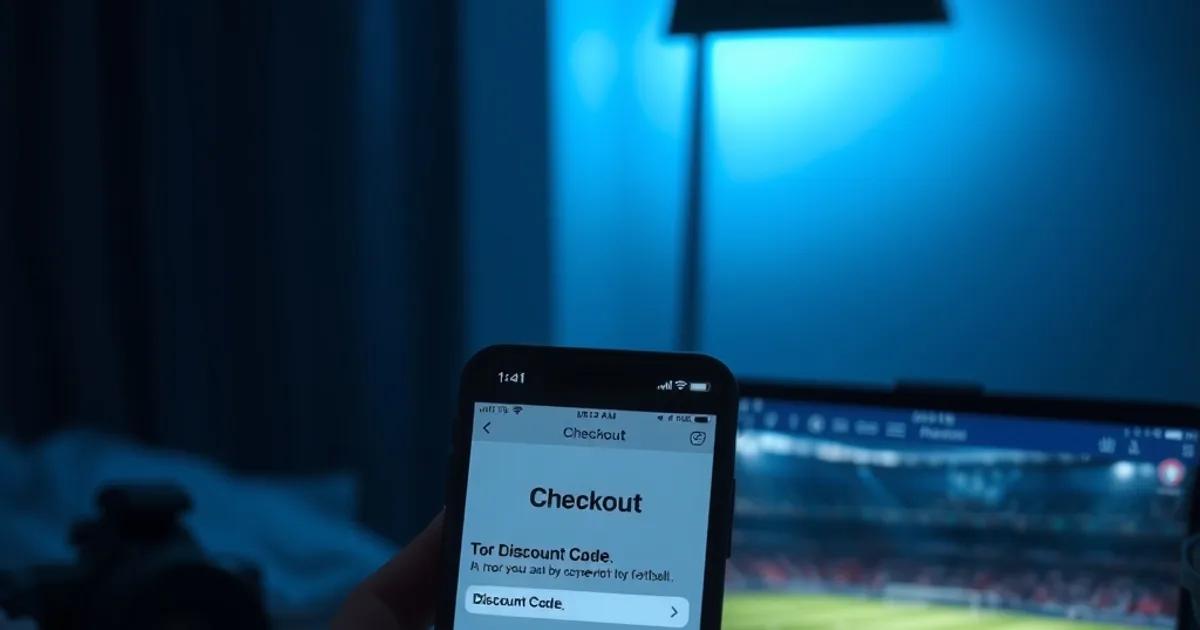
Type "iptv promo code" into Google and the results are almost all the same: coupon-aggregator pages that dump a list of alphanumeric strings with no way to tell which ones actually work. None of them explain how to verify a code before you hand over payment details, why a code that worked last month might be dead today, or how to spot the fake-discount pattern that UK IPTV shoppers keep reporting in scam forums this year.
The timing makes this worth getting right. The Premier League has already been back underway since 21 August 2026, and the NFL regular season kicks off on 9 September 2026 — which means late August and early September is the last real deal window before the autumn sports calendar locks most providers into full price. If you're going to sign up on a promo code, this is the window to do it in, but it's also exactly when fake-code listings multiply, because aggregator sites republish stale codes to catch the seasonal search spike without checking if they still redeem.
This guide skips the code list. Instead it covers how to verify a code is genuine before checkout, which payment methods protect you if it fails, how to match a code to the right provider, and what to do if a discount doesn't apply at the till.
Where Legitimate IPTV Promo Codes Live: Official Sites vs Aggregators
A genuine promo code originates from one of two places: the provider's own pricing or checkout page, or a direct message from the provider's official support channel (WhatsApp, email, or a verified social account). Anything beyond that is a copy — and copies degrade. Coupon aggregator sites scrape codes from forums, expired campaigns, and other aggregators, then republish them with a "last verified" date that is rarely rechecked.
The practical rule: treat any code you find on a third-party listing site as unverified until you've tested it against the actual provider. A code posted directly by the provider — on their pricing page, or sent to you in a support conversation — carries far more weight than one sitting in a table on a coupon blog with dozens of unrelated brands around it.
If you're not sure a provider is legitimate in the first place, that's a separate and more important check than the code itself. See our breakdown of the specific warning signs that flag a scam IPTV seller in the UK: /blog/iptv-provider-red-flags-scams-uk-2026.
Not sure if a code you found is real? Ask us directly before you pay anything.
5 Red Flags That Reveal a Fake or Dead Promo Code
Not every dead code is a scam — some are simply expired campaigns that never got taken down. But a cluster of these signs together should make you stop before entering payment details:
1) The code appears on ten or more unrelated coupon sites with identical wording and no expiry date shown. 2) The listing page has no publish or update date, or the date is clearly recycled year over year. 3) The code requires you to enter full card details before any discount is confirmed, rather than applying at checkout. 4) The "discount" is vague — a percentage off with no stated terms, no minimum plan, no channel/package it applies to. 5) The site pushing the code pressures urgency with a countdown timer that resets on refresh.
Any one of these alone isn't damning. All five together means the code is almost certainly stale bait designed to get you onto a payment page, not a real discount.
How to Test a Code BEFORE Checkout (Without Credit Card)
The single most useful habit: never enter card details to "check" if a code works. Legitimate providers let you validate a code without payment in one of two ways — either the checkout page shows the discounted price update live once the code is applied (before you reach the payment field), or you can simply ask via direct message/WhatsApp and get a plain-language confirmation of what the code covers and until when.
If a site only reveals whether the code worked after you've submitted card details, that's a checkout flow designed to obscure failed codes rather than confirm working ones — walk away.
It's also worth testing a provider before committing to any paid plan at all. If a trial period is available, that's the lowest-risk way to confirm service quality independent of whatever the code discounts. Our guide on timing a trial around the football calendar covers when a trial is actually worth taking: /blog/when-to-start-iptv-trial-premier-league-2026.
Payment Safety: Which Methods Protect You If a Code Fails
How you pay matters as much as whether the code works. Payment methods that include buyer protection or a dispute mechanism give you recourse if a discount doesn't apply as promised or the service never activates. Methods with no chargeback trail — certain crypto payments, direct bank transfers to a personal account, or prepaid gift cards — leave you with no recovery path if something goes wrong.
This isn't about assuming every provider is dishonest; it's about not needing to trust blindly. A legitimate provider has nothing to lose from you using a payment method that offers protection, because they intend to honour the code and deliver the service. A provider that insists on an untraceable payment method before confirming anything is asking you to accept all the risk yourself.
Keep a screenshot of the code, the advertised terms, and the confirmation message before you pay. If a dispute becomes necessary, having the original offer documented is what makes a chargeback or refund claim succeed.
Seasonal Timing: When IPTV Codes Are Most Valuable (Football Season Strategy)
Promo codes aren't evenly valuable across the year — they cluster around specific windows. Late August through mid-September is one of the strongest, because it sits right after the Premier League's return (21 August 2026) and just before the NFL's regular-season kickoff (9 September 2026), giving providers a commercial reason to compete on price before the peak-demand months of autumn and winter set in.
Once the football and NFL calendars are both in full swing — from mid-September onward — demand rises and discount codes tend to shrink or disappear, since providers no longer need to compete as hard to win new subscribers during the season everyone actually wants access for.
If you're weighing whether an IPTV subscription is worth it against a traditional broadcast package at all, that's a separate cost question worth working through before you commit to any plan, code or not: /blog/iptv-vs-sky-sports-cost-comparison-2026.
Matching Codes to Providers: Which Codes Work on Which Services
A code is only as good as its match to the plan you actually need. Before applying any code, confirm three things directly with the provider: which plan tier it applies to (some codes are restricted to annual plans only), whether it covers the device/connection setup you need, and whether it stacks with any other active offer or is single-use.
This matters most around simultaneous-stream limits. A discount on a single-connection plan is a false saving if your household needs multiple devices running at once — you'll end up paying more later to upgrade, wiping out whatever the code saved. Check your actual connection needs first: /blog/iptv-simultaneous-streams-connection-limit-uk-2026.
If a code's terms don't specify plan tier or connection count, ask before paying rather than assuming it applies broadly — vague terms are usually vague on purpose.
What to Do When a Code Doesn't Work: Refund & Dispute Steps
If a code fails to apply at checkout, don't pay full price and hope for a retroactive refund — that puts the burden of proof entirely on you after the fact. Instead, screenshot the failed application, contact the provider directly with the code and the advertised terms, and ask for either a working replacement code or the discount applied manually before you complete payment.
If you've already paid and the code didn't apply, the strength of your position depends entirely on the payment method you used (see the payment safety section above). Card payments and services with formal dispute processes give you a documented path; untraceable methods generally don't.
Keep every message. A provider that resolves a failed code quickly and without pushback is a good signal about how they'll handle any future service issue — a provider that stalls or blames you for a marketing code they published is a red flag worth remembering.
Skip the guesswork — see current verified plans and pricing before football season locks in full price.
The Real Savings: Annual vs Monthly + Code Stacking Strategy
The biggest lever on total cost usually isn't the promo code itself — it's the billing cycle. Annual plans are structurally cheaper per month than rolling monthly plans on almost every service model, because the provider is trading a lower rate for committed revenue upfront. A modest promo code applied to an annual plan compounds that saving far more than the same code applied to a single month.
"Stacking" — combining a promo code with an existing seasonal offer — is sometimes genuinely possible, but only when a provider explicitly confirms it. Don't assume two discounts combine just because both are technically live; ask directly, in writing, before paying.
The strategic order that gets the best real outcome: confirm the provider is legitimate first, test the code without payment, check it matches your plan and connection needs, then decide monthly vs annual based on how confident you are after a trial — not based on which billing cycle the code happens to look bigger on.
Frequently asked questions
Are IPTV promo codes usually scams?
Not usually — most are ordinary marketing discounts. But listings on third-party coupon aggregator sites are frequently stale or copied, which makes them unreliable rather than necessarily fraudulent. The risk isn't the code itself, it's trusting an unverified copy of one without checking it against the provider directly.
Can I verify a promo code without entering my card details?
Yes, and you should insist on it. Legitimate checkout pages show the discounted price update live once a code is applied, before payment. If a site only confirms whether a code worked after you've submitted card details, treat that as a warning sign rather than a normal checkout quirk.
Why do promo codes disappear once football season starts?
Providers compete hardest on price during quieter demand windows. Once the Premier League and NFL are both running at full intensity, demand for IPTV access rises on its own, so there's less commercial pressure to discount. That's why late August to mid-September is a stronger code window than October or November.
Do promo codes work on annual plans?
It depends entirely on the code's stated terms — some are restricted to annual plans, others to monthly. Never assume; confirm the plan tier a code applies to directly with the provider before paying, since applying an annual-only code to a monthly checkout (or vice versa) is one of the most common reasons codes appear to "fail."
What should I do if a promo code doesn't apply at checkout?
Don't complete the payment at full price hoping for a refund afterward. Screenshot the failed attempt and the advertised code terms, then contact the provider directly and ask them to either fix the code or apply the discount manually before you pay.
Read next: the pricing page, the setup tutorial or the FAQ.